If you are reading this, there are likely things going on in your life that have you asking: “Am I addicted to porn?”
With so much conflicting information, you may also be wondering: “How do I know if I have a problem?”
In a world where sexual content is everywhere, it can be difficult to know what is normal—and what is not.
In certain conversations and certain circles, watching porn seems to be acceptable, but you may be uncomfortable about your own use and wondering if you should at least explore these questions with an open mind.
Why This Question Is So Hard to Answer Honestly
The seemingly inescapable presence of sexual content can trick us into believing it must be OK. Things we are exposed to over long periods of time tend to look like the norm, and in fact become the norm. But that doesn’t mean it is good for us.
Tobacco and alcohol are good examples. The producers normalized and even glamorized their use while knowing the addictive nature and health risks. Over time, constant exposure makes something feel normal—even when it may not be good for us.
Because of that, we look away from the harmful consequences especially if it gives us pleasure. We believe that we aren’t going too far, that it is OK because it is everywhere.
But somewhere deep inside, we question if there is too much of a good thing, if a line has been crossed and we feel some internal discomfort.
What Most People Think Porn “Addiction” Looks Like
When people think of porn addiction, it brings up images of sitting at a computer or scrolling on a phone, looking at images or videos of explicit sexual material or acts for hours or even days on end.
They think of the addiction as if it is alcohol or drugs and imagine someone who cannot go a day without drinking or using – or watching porn. But just like substance abuse, there are bingers – people who use for a period of time and stop for a period of time.
In addition, the internet provides no end of choices. The internet offers endless variation—far beyond what most people initially expect. And no end to the pop-ups trying to get you to go to some place you have never gone before or try something you never thought you would try.
These platforms are designed to pull you deeper over time.
And don’t overlook searching for images on what you might be deeming to be acceptable sites, like Instagram, Facebook, Reddit, and X. These are prime examples of how sexual content has been normalized.
Of course, on the extreme end, some people do spend hours and days, and hundreds if not thousands of dollars on these activities. They ignore responsibilities and other harmful consequences – even ones they choose not to see.
It is important to note that porn addiction and sex addiction are not the same thing. There can be overlap but for clarity, think of porn addiction as anything that is in the virtual or digital world and sex addiction being engaging in sexual activity with a person.
If you think you may be a sex addict, you may want to read: Is My Sexual Behaviour Becoming a Problem? Signs It’s Crossing a Line
The Signs It May Be More Than Just a Habit
Let’s go back to an earlier question: “How do I know it is more than a habit?”
First, check your discomfort level against your activities. You are here and you have read this far, so you must be questioning.
A key question is whether this is a hidden or secret behaviour—and whether you would be comfortable if others knew the full extent of it.
If you find yourself preoccupied with finding time to engage in these behaviours or fantasizing about some things you have seen or done, it is likely more than just a habit.
If you have told yourself you are going to stop but keep going back to the behaviour in spite of the real or potential consequences, it is likely more than a habit and something you are uncomfortable continuing.
The Role Porn Starts to Play in Your Life
By the time anyone gets to the point of asking the question: “Am I a porn addict?” something is usually very clear. The amount, frequency and/or types of porn a person is engaging in is considerably different than what it used to be.
It may have started out as occasional curiosity – one type of porn, maybe only one site, maybe once a month for a few minutes but that has changed.
Maybe it is being used as a coping mechanism, numbing out or escaping reality. The problem is that the brain gets used to anything that is providing relief or pleasure and wants more.
What started out to be once in a while because of a highly stressful situation becomes the “go to” when anything feels uncomfortable. This is the dopamine reward cycle at work.
What once worked no longer does—and more time or more stimulation is needed. A few minutes becomes an hour or two. Sometimes with the stated intent of just engaging for a few minutes, you suddenly realize that you have been watching or searching for an hour or two or three. It is like time disappeared.
Typically, when behaviours start to escalate, people also find themselves seeking more extreme content.
Why It’s Easy to Tell Yourself It’s Not a Problem
The arguments people use to convince themselves it is not a problem, are rationalization, minimization, comparison and intellectualization.
A common thought is: “I can stop anytime.” Yet attempts to cut back often don’t last.
“I only do this occasionally” is another common belief—often without a clear sense of how much time is actually being spent.
Comparison shows up as: “I’m not as bad as others,” which shifts focus away from your own discomfort.
Intellectualizing involves searching for reasons why it’s not a problem—rather than paying attention to what you already sense.
If you find yourself going back and forth on this, you may also want to read: Are Sex Addiction and Porn Addiction Real?
What This Usually Leads To Over Time
What happens over time is it creeps up on you.
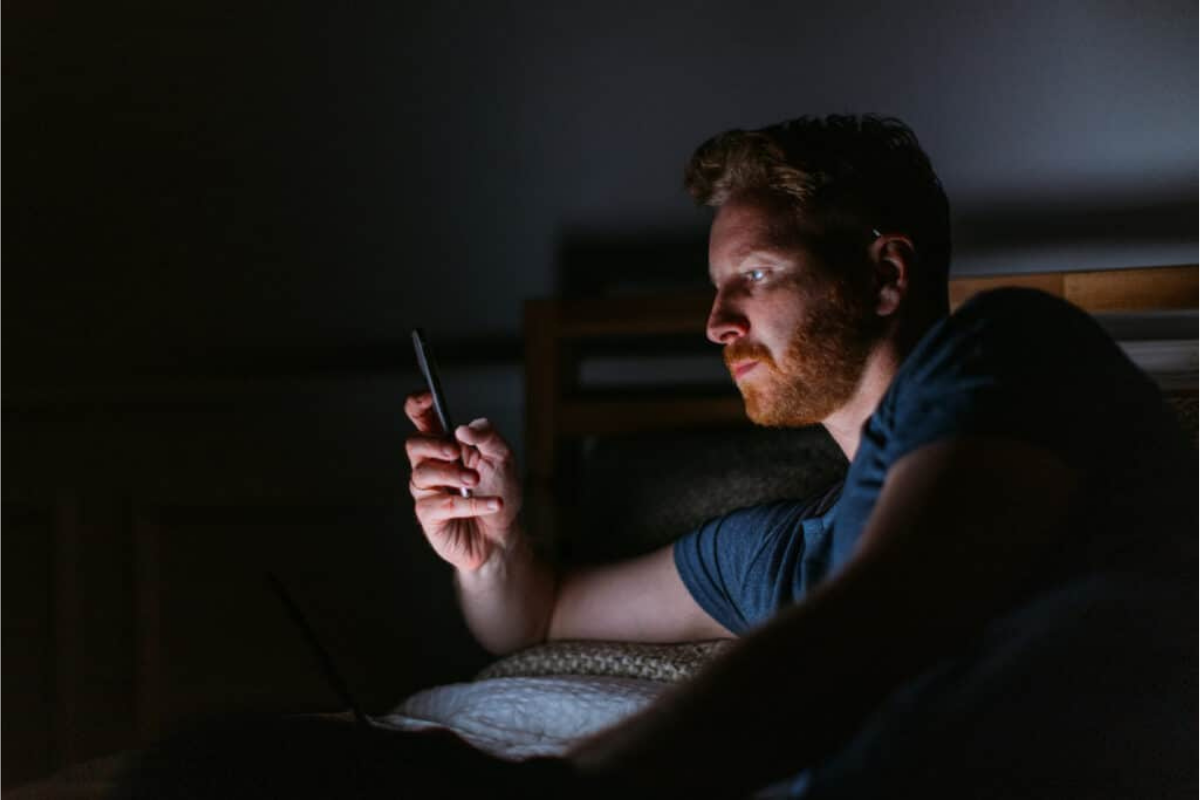
You find yourself looking forward to time alone when you can get on your favorite sites or explore new ones.
Because of the shameful and secretive nature of this addiction, people become more isolated, spending time alone and even making up excuses not to go to functions or turn down invitations to be with friends and family.
Over time, boundaries shift. What once felt outside your comfort zone begins to feel acceptable.
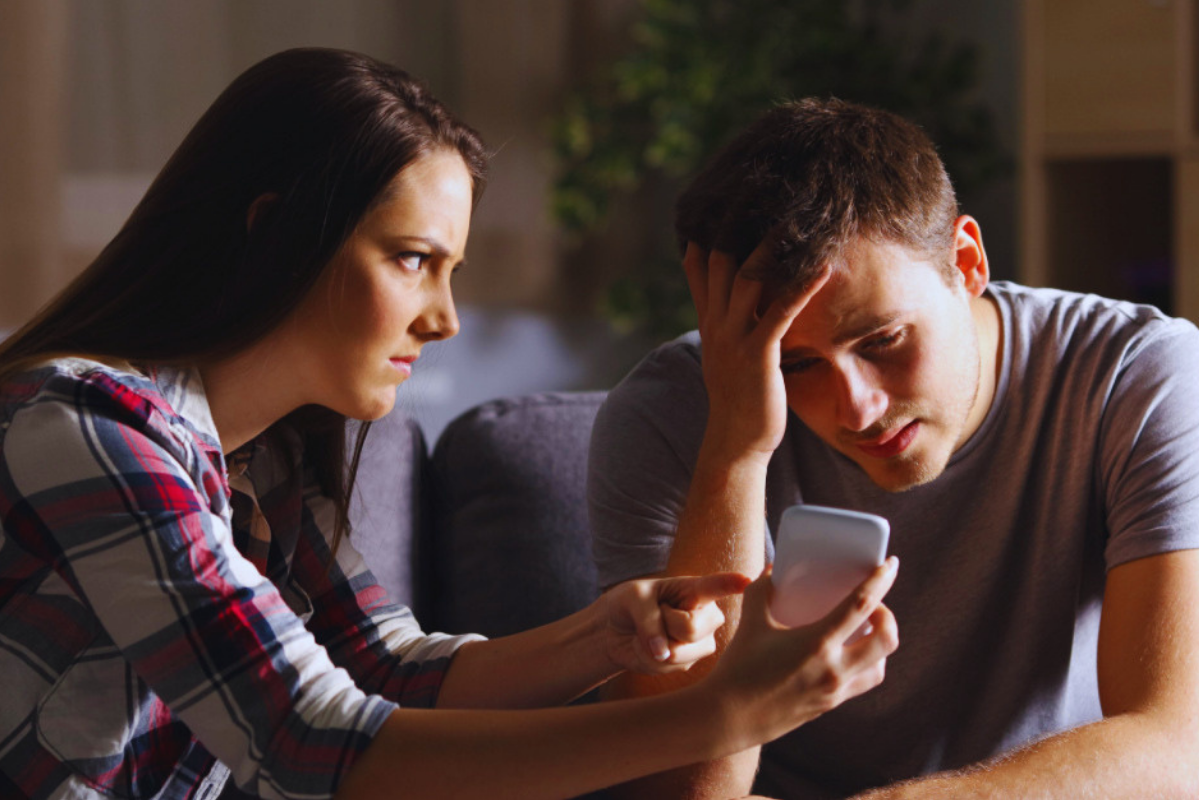
You may not even be aware, but your relationships are suffering. You seem increasingly distant. If you are in a romantic relationship, your partner might sense something is wrong, that you are changing.
This article published by Northwestern Medicine, Pornography Addiction highlights many of the symptoms.
If You’re Wondering Where You Fall
As with most addictions, porn addiction is on a continuum. Deciding if you need help requires honest self-reflection. Three questions can help you assess where you are:
Number one is to ask yourself: Is my behaviour escalating? Realizing that what you are looking at and engaging with has changed since you first were introduced to this world. It is important to understand that it is not just about the change in the types of behaviours but also the amount of time you are spending in the behaviour.
Then ask: Is this secret or hidden behaviour? Even if you partner, friends or family know you watch porn, do they know the full extent of it (including how long you spend each day or week) and would you be comfortable telling them.
Finally: Have you told yourself you should cut back, have tried to cut back or told yourself you were only going to look or engage for a few minutes and lost track of time?
If you answered yes to any of these, it may be worth taking a closer look. Click here and take this two minute self assessment.
You may find the following articles helpful as you try to make these challenging decisions.
Is My Sexual Behaviour Becoming a Problem? Signs It’s Crossing a Line
Are Sex Addiction and Porn Addiction Real?