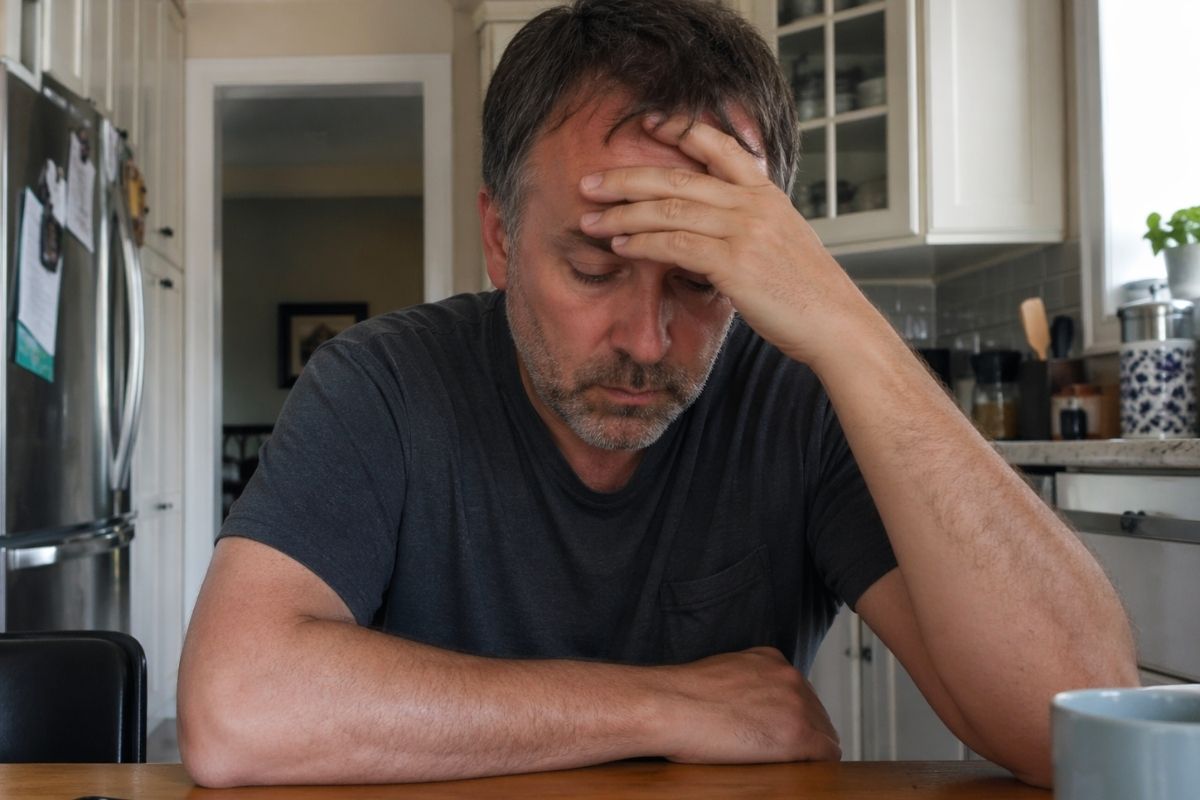
You Didn’t Expect to Be Here
When compulsive sexual behaviour is discovered in a relationship, it can feel like everything has been turned upside down. What once felt stable may now feel uncertain. Trust is shaken. Emotions are intense. Questions, so many questions.
It may start with a moment. A text message or email. Browser history. A realization you can’t unsee.
This is not just a difficult moment. It is a crisis. And from that point forward, things don’t feel the same.
Your mind starts racing. You’re trying to decide what’s real and what isn’t. You’re asking questions you never thought you’d have to ask.
How long has this been going on?
Is there more I don’t know?
Can the relationship survive this?
This moment – this discovery – is not just painful. It’s destabilizing.
And if you’re searching for answers right now, you’re not just looking for information.
You’re looking for something to hold onto.
This is where structure matters.
Two People in Crisis – Experiencing It Very Differently
One of the biggest misunderstandings after discovery is assuming both people are going through the same thing.
They’re not.
For the Person Struggling with the Behaviour
After discovery, there is often a flood of shame, fear, and panic. The secrecy that once held everything together is gone. Even if there have been promises to stop before, many people find they have not been able to follow through on their own.
From the outside, it can look like a series of poor decisions. But as explored in Is My Sexual Behaviour Becoming a Problem? the reality is more complex.
From the inside, it often feels like something that has become a pattern, compulsive, and difficult to interrupt without help and structure.
This is not simply about willpower. These behaviours are often driven by deeply ingrained patterns, emotional coping, and habit loops that are difficult to break without structure and support.
This is why early recovery is not about explaining everything or defending intentions. It is about stopping the behaviour and putting support in place immediately.
The partner understandably wants answers but needs the behaviour to stop and that is the first order of business for the addict.
Because without that, insight alone rarely leads to change.
For the Partner
For the partner, this experience is often deeply traumatic. It is called Betrayal Trauma. It can feel like your reality has been shattered. Many people describe constant thoughts, emotional swings, difficulty sleeping, and a strong need to understand what really happened.
For a deeper look at betrayal trauma and its effects this article in Psychology Today has some helpful information: The Cause and Effect of Partner Betrayal Trauma
What you believed to be true is now uncertain. Your sense of safety – emotionally and relationally – has been disrupted.
And often, a powerful and urgent need emerges:
“I need to know everything.”
That need makes sense. It’s your mind trying to regain control and restore safety.
But here’s where things become complicated.
The belief is:
“If I just get all the information, I’ll feel better.”
The reality is that in the early hours and days, the need to know everything can become overwhelming—and sometimes counterproductive.
Repeated questioning and partial answers – what is often called staggered disclosure – can actually increase distress. Each new piece of information can feel like a new discovery, reopening the wound again and again.
Often, in the early stages one or both will question if compulsive sexual behaviour is even really an addiction. You can read this article to learn more about Compulsive Sexual Behaviour Disorder: Are Sex and Porn Addiction Real?
Why Trying to Fix This Quickly Often Makes It Worse
In moments like this, urgency takes over:
- The partner wants answers immediately
- The other person wants to “come clean” quickly or deflect to relieve pressure
It’s understandable.
But unstructured conversations often lead to:
- Incomplete information
- Emotional escalation
- Additional damage to trust
What feels like progress can actually create cycles of retraumatization.
This is why recovery is not about speed. It’s about structure, pacing, and containment.
Why Individual Stability Comes Before Relationship Repair
One of the most common instincts after discovery is to focus on the relationship right away.
“We need to fix this.”
“We should go to couples therapy.”
It is very common to want to fix the relationship right away. But in the early stages, the focus is not on repairing the relationship – it is on helping each person become more stable.
What Stability Actually Looks Like
Before deeper work can happen, both people need some footing again:
- The partner needs support in calming the nervous system, reducing hypervigilance, and beginning to feel some sense of internal safety
- The person struggling with the behaviour needs to be actively engaged in recovery, with clear boundaries, accountability, and support in place
The first priority is stopping the behaviour. Without that, it is very difficult for either person to feel safe or for real healing to begin.
This stage is about creating stability and traction – not perfection, but enough steadiness to move forward in a meaningful way.
Because here is the reality many people don’t want to hear:
You cannot rebuild trust while the ground is still moving.
If the behaviour is ongoing – or even uncertain – there is no stable foundation to build from.
What Can Happen When This Step Is Skipped
When couples move too quickly into relationship repair:
- Conversations become reactive instead of productive
- The partner remains in a state of heightened distress
- The person struggling may rely on promises instead of real change
- Trust is attempted before safety exists
This often leads to frustration, setbacks, and a sense that “nothing is working.”
Not because recovery isn’t possible – but because the order is wrong.
A Structured Path Forward: The Three-Step Recovery Process
Once there is a degree of stability and meaningful engagement in recovery, the process can move forward in a structured way.
This is where healing begins to shift – from chaos to clarity.
There are proven protocols in place that lead to reestablishing the relationship and giving it the best chance of survival.
This requires willingness and commitment by both people. But even if it’s too early to decide about the relationship, the person struggling still needs to engage in their own recovery process.
There may be reluctance on the part of the betrayed partner to continue in the relationship or a feeling that there needs to be more time for personal healing and evidence of the addict partner’s sustained commitment to recovery. The betrayed partner still needs help and support to heal, work through their feelings and trauma with a skilled professional who understands sex/porn addiction.
Sometimes, when the partner needs more time, or is unsure about continuing the relationship, the person struggling may think, “What’s the point of getting into recovery?” Old thoughts like “it isn’t hurting anyone” or feelings of being entitled to the behaviour creep back in.
The shift in thinking needs to be: If this behaviour is OK, why do I keep it secret? Would I be OK to share it with my family and friends” and If I were to get into a new relationship would my new partner be OK with what I am doing? The obvious answers to any or all of these questions is why the addict partner needs to be in a structured recovery program.
Step 1: Formal Disclosure
Formal disclosure is a planned, structured, and complete account of the behaviour.
It is not:
- A series of conversations
- A pressured “tell me everything right now” moment
- A reactive attempt to relieve tension
It is:
- Written out carefully
- Prepared over time
- Guided by a professional
The goals are to:
- End secrecy
- Establish honesty
- Prevent further emotional harm
- Create a shared reality
This process takes time – often weeks. That is intentional.
Because partial or incomplete disclosure can be deeply damaging. If something is later discovered – intentionally or not – it can feel like the betrayal has happened all over again.
This is not about withholding the truth. It’s about delivering the truth in a way that does not cause further harm.
Step 2: The Partner’s Impact Statement
Once disclosure has taken place, the focus shifts to the partner’s experience.
The impact statement gives space to express:
- The emotional toll
- The confusion and grief
- The loss of safety and trust
This is not about punishment.
It is about being heard in a structured, supported way.
It allows the experience to move beyond surface anger into deeper emotional truth – where real healing begins.
Step 3: Emotional Restitution
The final step is a response from the person in recovery. This is not a simple apology. It is a demonstration of a desire to understand, accountability, and empathy.
Not defensiveness.
Not explanation.
This step reflects a shift – from reacting to the situation to beginning to understand the impact of the behaviours.
It marks the beginning of genuine relational repair.
Common Mistakes After Discovery
There are a few patterns that consistently make recovery more difficult:
- Trying to fix the relationship too quickly
- Relying on repeated questioning instead of structured disclosure
- Believing promises without seeing structured recovery in place
- Avoiding outside support or guidance
- Focusing on explanations before behaviour has stopped
These mistakes are not signs of failure. They are signs of how overwhelming this situation is.
But they do highlight why structure matters so much.
A Different Way to Think About Recovery
Many people enter this process with one question:
“Can we get back to how things were?”
But what existed before often included:
- Secrecy
- Disconnection
- Unspoken patterns
Recovery is not about going backward.
It is about building something:
- More honest
- More stable
- More intentional
That doesn’t happen quickly. But it does happen- with the right structure.
A Final Thought
If you’re in this right now, it likely feels overwhelming.
And the pressure to figure everything out immediately can be intense.
But this is what matters most: You don’t need to solve everything right now.
You need to avoid making it worse. Structure doesn’t slow healing.
It protects it.
And when this process is followed with consistency and support, recovery is not only possible – it can lead to a level of clarity and connection that didn’t exist before.
The following articles contain useful information for both the addict and the partner: